Most Sydney office fitouts hit delays, budget overruns, or compliance failures for one reason: electrical decisions were made too late. Builders, designers, and fit-out contractors move fast. If your electrician isn’t locked in before the design is finalised, you’re retrofitting, and retrofitting costs two to three times more than planning correctly from day one.
This guide identifies the five electrical office fitouts decisions that must happen in the planning phase, before a single wall is framed or a cable tray is ordered. Each section is structured so you can use it independently, in a meeting with your project manager, or as a checklist for your contractor.
QUICK ANSWER
- Decision 1: Conduct a load schedule before any design is locked. Underestimating power draw is the most common and costly fitout error.
- Decision 2: Confirm switchboard capacity and future-proofing headroom before selecting a tenancy.
- Decision 3: Specify your data and communications cabling infrastructure in the electrical brief, not after IT moves in.
- Decision 4: Lock in a lighting design that satisfies NCC 2022 energy efficiency requirements to avoid rework at practical completion.
- Decision 5: Sequence your eCert lodgement and compliance trail from day one, not as an afterthought at handover.
1. Conduct a Detailed Load Schedule Before Design Is Locked
A load schedule is a complete inventory of all electrical loads in a proposed tenancy: lighting circuits, power outlets, HVAC, server rooms, kitchen equipment, EV charging provisions, and any specialized equipment. It must be completed before your electrical design is drafted. Without it, every subsequent decision is guesswork.
This is the decision most fitout teams defer. A designer produces a floor plan, a builder quotes from it, and the electrical contractor is handed a brief that’s already fixed. The problem surfaces when the actual power demand, factoring in a proper kitchen, server racks, and EV charger provisions, exceeds what the tenancy’s sub-board can supply.
In commercial fitouts, a properly completed load schedule serves three functions simultaneously:
- Informs the switchboard specification — so your electrical contractor can confirm whether the existing board handles the load or requires an upgrade before you sign a lease.
- Triggers early network authority notification — if your load requires a new or upgraded supply, Ausgrid or Endeavour Energy typically requires 4–12 weeks lead time for approvals in the Sydney metro area.
- Anchors the cost estimate — a fixed-price electrical quote is only defensible if it’s scoped against a completed load schedule, not a floor plan.
What a Load Schedule Must Include
The load schedule for a Sydney commercial fitout in 2026 should itemise the following, with demand factors applied per AS/NZS 3000:2018 Table C2:
- General power circuits (GPOs) by zone, with separate circuits for workstations, peripherals, and meeting rooms
- Dedicated circuits for server/comms rooms — typically 2–4 x 20A circuits minimum for small-to-mid tenancies
- HVAC load, including any VRF or split-system additions planned as part of the fitout
- Kitchen and breakroom circuits (dishwashers, espresso machines, and commercial microwaves each warrant dedicated 15–20A circuits)
- EV charger provisions — even if EV chargers aren’t installed at fitout, conduit and sub-board capacity should be stubbed in now
- Audio-visual and display infrastructure (large-format screens, video walls, and control systems)
2. Confirm Switchboard Capacity and Future-Proofing Headroom
Before committing to a tenancy or approving a fitout design, verify that the building’s main switchboard and the tenancy’s sub-board can carry your actual load with at least 25% spare capacity. A switchboard with less than 10% headroom is an immediate constraint, and upgrading it mid-fitout is one of the most disruptive and expensive variations possible.
This is the decision that separates experienced fitout teams from those who learn the hard way. The switchboard capacity check is not the building manager’s job, the designer’s job, or the project manager’s job. It is the licensed electrician’s job, and it should happen before the lease heads of agreement are finalised, not after.
In Sydney’s commercial building stock, the majority of buildings constructed before 2000 were designed around electrical loads that are a fraction of what modern tenants require. A 1990s office floor was sized for fluorescent lighting and desktop PCs. A 2026 equivalent carries LED display walls, fast-charging workstations, voice-activated HVAC, and potentially a commercial kitchen where there was once a kitchenette.
The Switchboard Pre-Fitout Checklist
- Obtain the existing single-line diagram (SLD) from the building owner or facilities manager. If one doesn’t exist, that’s a red flag. Commission one before proceeding.
- Calculate actual load demand against the SLD using your completed load schedule from Decision 1.
- Identify spare circuit positions — physical space in the board for new MCBs and RCDs, not just spare capacity on existing circuits.
- Check the main fuse/breaker rating against anticipated peak demand, including diversity factors.
- Assess earthing and MEN link condition — high-resistance MEN connections are an increasingly common failure mode in Sydney’s older building stock as metallic services are replaced with non-conductive alternatives.
3. Specify Data and Communications Cabling Infrastructure in the Electrical Brief
Data cabling is not an IT decision—it’s an electrical infrastructure decision that must be made before ceilings are closed, and walls are framed. Specifying Cat6A or fibre pathways, riser routes, and comms room locations after construction begins means open ceilings, replastered walls, and a separate mobilisation charge. Get it in the brief on day one.
The division between “electrical” and “IT” scope is one of the most persistent and expensive organisational failures in commercial fitouts. In practice, data cabling, conduit pathways, and communications room fit-outs are licensed electrical work under the NSW Electricity (Consumer Safety) Act 2004. They require the same compliance documentation, the same CCEW process, and the same eCert lodgement as power and lighting circuits.
When the data scope is handed to the IT team to sort out after the builders leave, two things happen. First, the comms room ends up shoehorned into the worst available space instead of being positioned for optimal cable run distances. Second, above-ceiling cable management—trays, conduit runs, and penetrations—has to be retrofitted through finished work, with costs that routinely exceed the original cabling budget.
Data Infrastructure Decisions to Confirm Before Design Freeze
- Cable category: Cat6 vs. Cat6A vs. Cat8 vs. fibre—driven by your network topology and anticipated bandwidth needs over a 10-year horizon.
- Comms room location and size: Per BICSI TDMM standards, a telecommunications room serving up to 465 m² (5,000 sq ft) of floor area requires a minimum 10 × 8 ft (approximately 9.3 m²) dedicated room; larger serving areas scale to 10 × 9 ft or 10 × 11 ft. Always add a 20% growth buffer at the design stage—retrofitting a comms room that’s too small is one of the most disruptive mid-fitout variations possible.
- Cable tray and containment routing: Must be coordinated with HVAC, structural beams, and sprinkler layouts before any of those are installed.
- Riser capacity: If the tenancy spans multiple floors, confirm the building’s riser has physical capacity and fire-rating continuity for your cable volumes.
- Wireless access point positions and power source: PoE switches vs. dedicated circuits—this directly affects the load schedule in Decision 1.
4. Lock In a Lighting Design That Satisfies NCC 2022 Before Any Procurement
NCC 2022 introduced significantly tighter energy efficiency requirements for commercial office lighting, including mandatory occupancy sensor logic, daylight harvesting controls, and maximum power density limits. A lighting design that doesn’t account for these from the start will fail a Section J assessment at practical completion and require costly retrofits before an occupancy certificate is issued.
This is the compliance blind spot that catches the most fitout teams in 2026. LED fixtures are now the baseline expectation, but the NCC 2022 requirements go well beyond “use LEDs.” They specify how lighting is controlled, zoned, and metered. A lighting design that looks compliant at the product level can fail Section J if the control logic hasn’t been documented and tested correctly.
NCC 2022 Lighting Requirements for Commercial Offices (Summary)
| Requirement | What It Means in Practice | Common Fitout Failure Point |
|---|---|---|
| Maximum lighting power density | Office spaces: typically ≤ 9 W/m² (varies by space type) | Decorative pendants and accent lighting pushing area over the density limit |
| Occupancy sensor control | All enclosed spaces ≤ 100 m² must have auto-off or dimming control | Sensors specified but not programmed or commissioned correctly |
| Daylight sensing in perimeter zones | Spaces within 6 m of glazing must have daylight-responsive dimming | Daylight sensors omitted from design, identified only at Section J audit |
| Separate switching by zone | Perimeter zones must be switchable independently from interior zones | Single-circuit lighting design, wired for simplicity rather than compliance |
| Emergency lighting compliance | AS 2293 exit and emergency fittings must be on a dedicated monitored circuit | Emergency fittings were added at the end of the design without circuit isolation |
The practical implication: your lighting design and your electrical design must be developed together, by the same licensed contractor, against the same Section J target. A lighting designer who works in isolation from the electrician produces a specification that looks good in a PDF but fails in commissioning. For electrical office fitouts in Sydney, this integrated approach is the difference between a clean handover and a defect list that holds up occupation.
5. Sequence Your eCert Lodgement and Compliance Trail from Day One
From mid-2026, all electrical work in NSW must be lodged digitally via the BCNSW eCert portal. A paper or PDF Certificate of Compliance for Electrical Work (CCEW) is no longer legally sufficient. If your electrical contractor cannot demonstrate an eCert lodgement workflow before work begins, they cannot legally close out the job, and your occupancy certificate can be held until they do.
Compliance sequencing is the decision no one makes explicitly, which is exactly why it creates problems at the end of projects. The eCert mandate changes the nature of compliance from a certificate you collect at the end to a workflow that must be embedded in the project from the first scope document.
Here’s what this looks like in practice for a Sydney office fitout in 2026:
- Contractor verification: Confirm your electrical contractor is registered and active on the BCNSW eCert portal before signing any contract. Ask to see their portal login or a sample of a recently lodged certificate.
- Scope documentation: The CCEW lodgement requires specific scope detail—circuit descriptions, test results, switchboard ID, and asset tags. This information must be captured during the work, not reconstructed from memory afterward.
- Staged lodgement for fitouts: Large fitouts are best structured with staged CCEWs—one for rough-in, one for fit-off, and one for commissioning. This creates a defensible, time-stamped compliance trail and avoids a single high-risk lodgement at practical completion.
- Sustainable Buildings SEPP interaction: Under this policy, any significant new or fitout work in a commercial building must align with NCC 2022 energy performance standards. This means your eCert lodgement must cross-reference a Section J report. Confirm this linkage with your certifier before work commences.
- Copy to building owner and managing agent: The eCert must be provided to both parties and retained in the building’s compliance file. This is not optional—it affects the building’s insurance coverage, lease compliance, and future DA approval status.
Repair vs. Plan: Why Pre-Fitout Electrical Decisions Pay Off Twice
The five decisions above aren’t just compliance checkboxes. Each one is an investment in cost certainty, timeline control, and long-term asset performance. Here’s how the planning-phase cost compares to the variation-phase cost across each decision:
| Decision | Cost if Made in Planning Phase | Cost if Deferred to Construction Phase | Typical Cost Multiplier |
|---|---|---|---|
| Load Schedule | 4–6 hours consulting + design time | Sub-board upgrade variation + network authority delay | 5–15× |
| Switchboard Capacity | Site visit + SLD review | Mid-fitout switchboard replacement with tenant disruption | 8–20× |
| Data Cabling Infrastructure | Included in base fitout scope | Ceiling re-open, replaster, repaint + remobilisation | 3–6× |
| Lighting Design (NCC 2022) | Integrated in the design fee | Retrofit sensors, re-circuit, Section J re-assessment | 4–10× |
| eCert Sequencing | Zero additional cost—part of a compliant contractor’s workflow | Defect rectification, certification delays, and potential hold on OC | Project-dependent |
Note: Cost multipliers are directional estimates based on Lightspeed Electricals’ project intake data. The general principle is supported by peer-reviewed Australian construction research: a 2005 study of 161 construction professionals by Love & Edwards (Edith Cowan University) found that rework in Australian construction projects averages 6.4% direct and 5.9% indirect costs as a percentage of contract value, and that indirect rework costs can be up to 6× the direct cost due to supervision, rescheduling, procurement, and program disruption. A 2009 follow-up study of 260 projects by Love found rework averaged 10–12% of project value. Early electrical decisions are a primary lever for preventing this rework cycle.
Source: Love, P.E. & Edwards, D.J. (2005). Calculating total rework costs in Australian construction projects. Civil Engineering and Environmental Systems, 22(1), 11–27. Edith Cowan University Research Online | DOI: 10.1080/10286600500049904
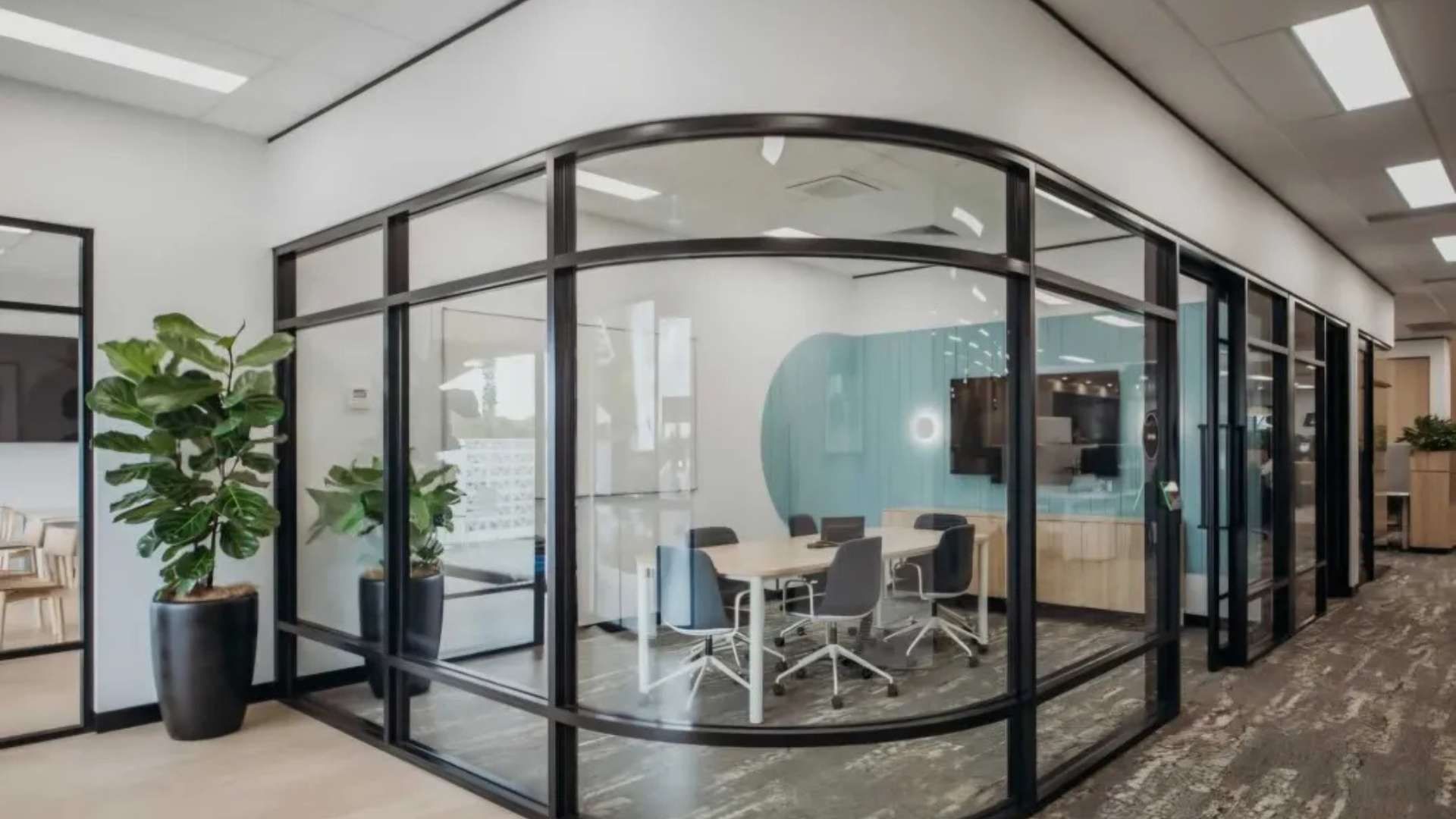
A modern open-plan layout featuring custom suspended linear LED task lighting and integrated workstation power infrastructure executed by Lightspeed.
Eliminate Fitout Delays with Lightspeed
Don’t leave your fitout timeline to guesswork. If you’re preparing for a design freeze or finalising a lease agreement, our experts are ready to help. Lightspeed provides comprehensive site diagnostics within the week, delivering fixed-scope quotes and full eCert-compliant reporting.
Secure Your Strategic Consultation →
Call via 1300 968 551
Frequently Asked Questions
What electrical checks should I do before signing a commercial lease in Sydney?
Before signing, confirm three things: (1) the tenancy’s sub-board has sufficient spare capacity and circuit positions for your planned load, (2) the building’s single-line diagram is current and accessible, and (3) there is an existing compliance trail (CCEWs on file) for any previous electrical work in the space. A licensed electrician can complete a pre-lease electrical assessment in 2–3 hours and produce a written report. This is standard practice in Sydney commercial leasing and should be non-negotiable for any tenancy with a fit-out component.
How far in advance should I engage an electrician for an office fitout?
At minimum, your licensed electrician should be engaged at the same time as your interior designer—ideally 8–12 weeks before construction commences. If the fitout requires a new or upgraded electricity supply from Ausgrid or Endeavour Energy, allow an additional 4–12 weeks for network authority approvals. Late electrical engagement is the single most common cause of fitout program delays in Sydney commercial projects.
Does NCC 2022 apply to my office fitout in NSW?
Yes. NCC 2022 applies to new commercial buildings and to significant fit-out and refurbishment work in existing buildings. The lighting and energy efficiency provisions under Section J are typically triggered when a fitout involves new lighting circuits, new HVAC, or changes to the building envelope. Your certifier will require a Section J assessment report as part of the complying development or DA approval process. Engage a Section J assessor at the same time as your electrical contractor — not at practical completion.
What is eCert lodgement and why does it matter for my office fitout?
eCert lodgement is the mandatory digital submission of a Certificate of Compliance for Electrical Work (CCEW) through the NSW Building Commission’s BCNSW portal. From mid-2026, paper and PDF certificates are no longer legally sufficient for any electrical work in NSW. For a fitout, this means your electrical contractor must lodge a CCEW digitally at each stage of the work. Buildings without digitally-lodged CCEWs are technically non-compliant, which can affect insurance coverage, lease arrangements, and development application approvals.
How much does the electrical component of an office fitout typically cost in Sydney?
According to the Cushman & Wakefield Office Fit Out Cost Guide Australia 2026, Sydney office fitouts average $2,599 AUD/sqm. Mechanical and electrical works—covering HVAC, electrical, fire, and UPS—account for approximately 25% of total fitout cost per JLL market data. For a 500 m² standard tenancy at $2,599/sqm, the total fitout budget is approximately $1.3M; the electrical-only portion (a subset of the M&E allocation) varies significantly by tenancy complexity and should always be priced from drawings and a completed load schedule, not estimated as a flat percentage. Specialist tenancies (server rooms, commercial kitchens, AV-heavy fitouts) will carry a higher electrical share than an open-plan office.
Can the builder manage the electrical contractor for my fitout, or do I need to engage one directly?
Most builders will manage the electrical subcontractor as part of a head contract, and this is a reasonable arrangement if the builder has a proven relationship with a licensed commercial electrician who understands eCert, NCC 2022, and AS/NZS 3000. However, for fitouts with significant electrical scope (new switchboards, data rooms, or specialist lighting), consider engaging the electrical contractor directly as a separate trade contract. This gives you direct access to the compliance documentation, removes a margin layer, and ensures the electrician’s primary obligation is to you rather than to the builder’s program.
What’s the difference between an electrician who does fitouts and a commercial electrician?
All commercial electricians hold the same base NSW licence, but commercial fitout work requires specific experience with multi-circuit office environments, NCC Section J compliance, BCA certifier interfaces, switchboard design, and data/comms coordination. A residential or small-works electrician may be technically licensed to perform fitout work but lack the design capability, compliance knowledge, and project coordination experience that a high-value tenancy requires. When briefing a contractor, ask specifically for references on commercial fitout projects of comparable scale, not just general electrical experience.
References
- BERA. (2024). NCC 2025 commercial energy efficiency preview. Building Energy Rating Assessment. https://www.bera.com.au/ncc-2025-commercial-energy-efficiency-preview/
- Cushman & Wakefield. (2025). Asia Pacific office fit-out cost guide 2025. https://www.cushmanwakefield.com/en/australia/insights/office-fit-out-cost-guide
- ElecCalc Australia. (n.d.). Maximum demand AS/NZS 3000 tables C1 and C2. https://eleccalc.au/guides/maximum-demand-as-nzs-3000-tables-c1-c2
- Grand View Research. (2024). Structured cabling market size, share & trends analysis report by product, by application, by region, and segment forecasts 2024–2030. https://www.grandviewresearch.com/industry-analysis/structured-cabling-market
- JLL. (2025). Asia Pacific office fit-out cost guide 2024/2025. Jones Lang LaSalle. https://www.jll.com/en-in/guides/apac-fit-out-costs-guide
- Love, P. E. D., & Edwards, D. J. (2005). Calculating total rework costs in Australian construction projects. Civil Engineering and Environmental Systems, 22(1), 11–27. https://doi.org/10.1080/10286600500049904 Cited by: 75
- NSW Government. (n.d.). Electronic certification (eCert) portal. Building Commission NSW. https://www.nsw.gov.au/housing-and-construction/compliance-and-regulation/ecert-portal
- SafeWork NSW. (n.d.). Electrical work. https://www.safework.nsw.gov.au/hazards-a-z/electrical-and-power/electrical-work